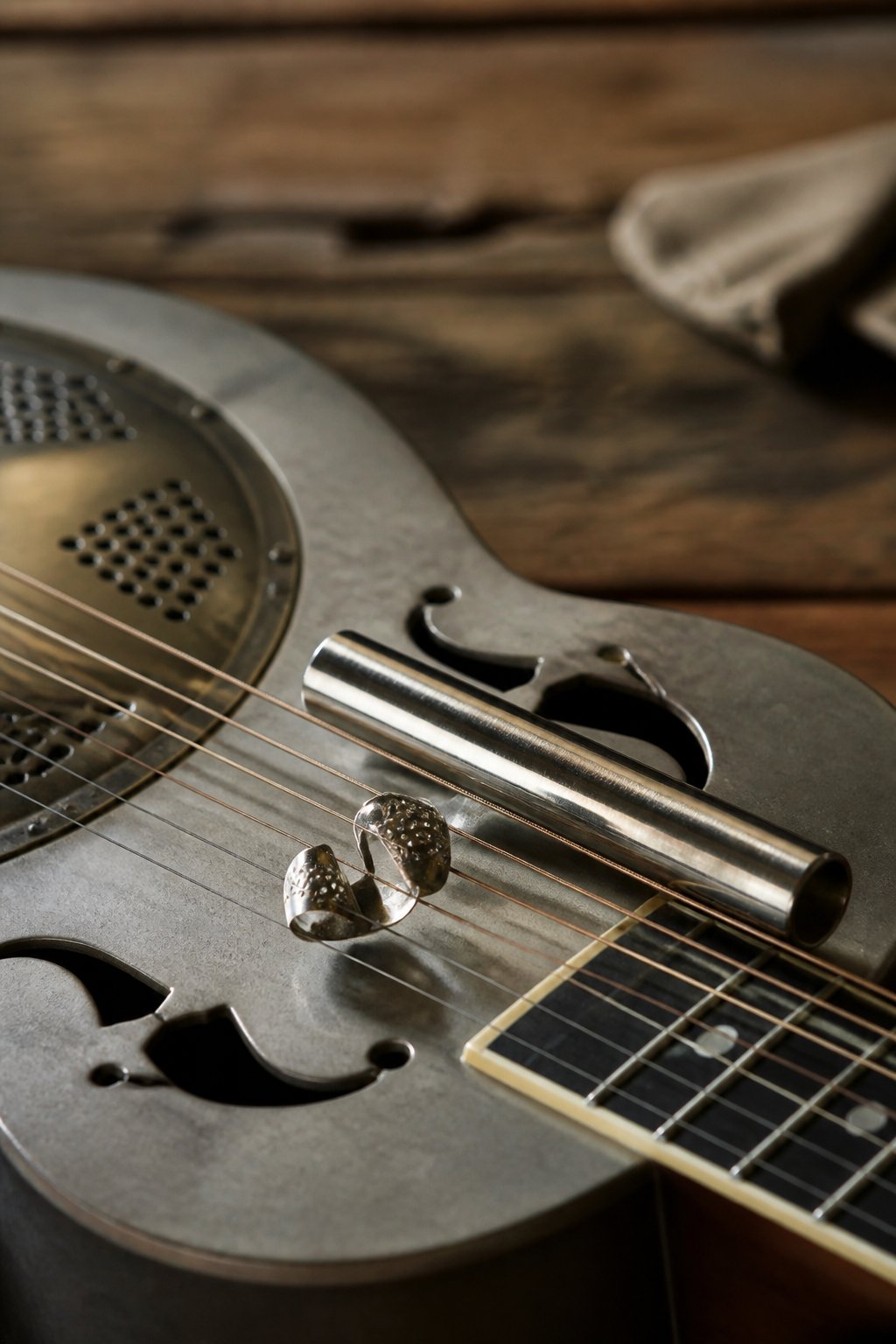
The short answer, because it is the only thing most people want: Dobro is a brand name and resonator guitar is the category. Every Dobro is a resonator guitar. Most resonator guitars are not Dobros, because the name is a registered trademark and other makers are not allowed to use it. In a jam, everyone says dobro anyway.
That is the whole answer to the naming. Underneath it there is a real question, which is which kind of resonator guitar you actually want, and the answer depends on three choices that have nothing to do with the badge.
Where the name came from
In the mid 1920s the Slovak born instrument maker John Dopyera was working on the same problem everybody had: a guitar could not be heard next to a banjo or a brass section. His solution was to put spun aluminium cones inside the body and rest the bridge on them, turning the instrument into a mechanical loudspeaker. The first production version, with three small cones, appeared under the National name in 1927.
The Dopyera brothers then left National and set up on their own in 1928 with a different design using a single inverted cone. They needed a name, and they built one out of DOpyera BROthers. It also happens to mean good, or goodness, in Slovak, which the family enjoyed pointing out.
The two firms later merged, the name changed hands several times over the following decades, and in the 1990s Gibson acquired the company that owned it. So today Dobro is a registered trademark with an owner, which is why a shop selling a spider bridge resonator guitar built by anybody else has to call it a resonator guitar, a squareneck, or occasionally a hound dog, and why players carry on saying dobro regardless.
Asking whether an instrument is a dobro or a resonator guitar is like asking whether a vacuum cleaner is a Hoover. The interesting question is what is inside it.
The three questions that matter
Forget the name. When you are looking at an instrument, or writing to a seller, these are the three things to establish.
| Choice | Option one | Option two | What it decides |
|---|---|---|---|
| Neck | Square, played on the lap with a bar | Round, played upright like a guitar | Whether you can fret it at all |
| Cone | Spider bridge, one inverted cone | Biscuit bridge or tricone | Bluegrass voice against blues voice |
| Body | Wood | Brass or steel | Warmth and midrange against sustain and cut |
The classic bluegrass instrument is the combination in the first column all the way down: squareneck, spider bridge, wooden body, tuned to open G. The classic country blues instrument is the second column: roundneck, biscuit or tricone, often a metal body, played with a bottleneck slide or with fingers.
What each one sounds like

A spider bridge instrument has a vocal, woody midrange with a bark on the attack, and it is unmistakable behind a bluegrass singer. The eight legged aluminium spider spreads the string energy around the rim of the cone rather than concentrating it in the centre, which is what produces that particular voice.
A biscuit bridge instrument concentrates everything at the apex of a single downward facing cone through a small wooden puck. The result is rawer, more immediate and more percussive, and it is the sound of prewar country blues.
A tricone spreads the load across three smaller cones joined by a T shaped bar. It is sweeter, it sustains far longer and it costs considerably more. It suits slow slide playing and Hawaiian style far better than it suits a fast bluegrass break.
Body material sits on top of all that. A metal body adds sustain, brightness and cut. A wooden body is warmer and rounder. Neither is more correct, and the choice follows the music rather than the other way round.
Which one to buy
- For bluegrass and Americana: a squareneck, spider bridge, wooden body instrument in open G. There is no serious alternative, and it is the only configuration where the standard repertoire and every instruction book will make sense.
- For blues, or as a guitarist who wants the sound: a roundneck. Biscuit bridge if you want punch, tricone if you want sustain and can afford it. You can play it like a normal guitar from the first minute.
- If you are not sure: a roundneck, because you can play it conventionally, play it with a bottleneck, or fit an extension nut and try lap style without buying anything else. A squareneck can only ever be played one way.
- If you want the loudest thing in the room: a metal body single cone, which is the whole reason these instruments exist.
What to ask a seller, in one message
Is the neck square or round, is it a spider bridge or a biscuit, is the body wood or metal, and what tuning is it in at the moment. Four answers tell you everything about what the instrument is for, and none of them depend on what is printed on the headstock. Follow up with a question about buzzing, which is the usual fault, and ask for a short recording of the bar being drawn up the neck on the top two strings.
What they cost
Entry level wooden bodied spider bridge instruments from the established import brands start somewhere around three to five hundred pounds, and they are perfectly playable. The next step, roughly nine hundred to two thousand, buys a better cone, better cone seating and a real improvement in note separation, which on this instrument is the thing that matters most. Beyond that you are into small workshop instruments where the cone is hand fitted, and the difference is real but so is the price.
Metal bodied instruments generally cost more than wooden ones at the same level, and they weigh considerably more, which matters if you play standing up.
Second hand, the thing to test is buzzing. Play every string at the fifth, seventh and twelfth frets with a bar and listen. Most buzzes are a loose coverplate screw or a spider leg not sitting flat, and cost nothing. A warped or damaged cone is a replacement.
Common questions
What is the difference between a dobro and a resonator guitar?
Dobro is a trademarked brand name, now owned by Gibson, applied historically to spider bridge resonator guitars. Resonator guitar is the general category, covering spider bridge, biscuit bridge and tricone designs from any maker. All Dobros are resonator guitars and most resonator guitars are not Dobros.
Is a squareneck or a roundneck better?
They are different instruments. A squareneck can only be played flat on the lap with a steel bar and is the bluegrass standard. A roundneck plays like a normal guitar and suits blues and anyone who does not want to learn a new technique from scratch.
Can I convert a roundneck to lap playing?
Yes, with an extension nut that raises the strings clear of the frets. It is reversible and inexpensive, and it is the sensible way to try the style before buying a squareneck. Converting a squareneck to normal playing is not possible.
What tuning do bluegrass resonator players use?
Open G, written GBDGBD from the lowest string to the highest, so the bar laid straight across any fret gives a major chord.
Are cheap resonator guitars any good?
The wooden bodied import instruments in the lower hundreds are genuinely playable, and the usual weakness is cone seating rather than anything structural. Have a look at how the cone sits and listen for buzzes before you buy, and remember that a cone can be upgraded later for a fraction of a new instrument.
Where to go next
- The resonator guitar, explained from the cone up, how the instrument works and how it is played.
- The five string banjo, the other open G instrument in a bluegrass band.
- Flatpicking guitar from scratch, if you would rather stay upright with a plectrum.
- Festivals in Ireland and Britain, where you can hear all three cone designs in one afternoon.
The same habit of asking what a thing is made of, and how much of it you actually need, runs through the rest of the notebook. A resonator guitar is a cone, a spider and a coverplate before it is a name. Food works the same way: a hamper is ratios, not a basket. If you are packing one for a session or a weekend away, the notes on cheese board portions cover weights, labels and wrapping, and they sit alongside this page without contradicting it.