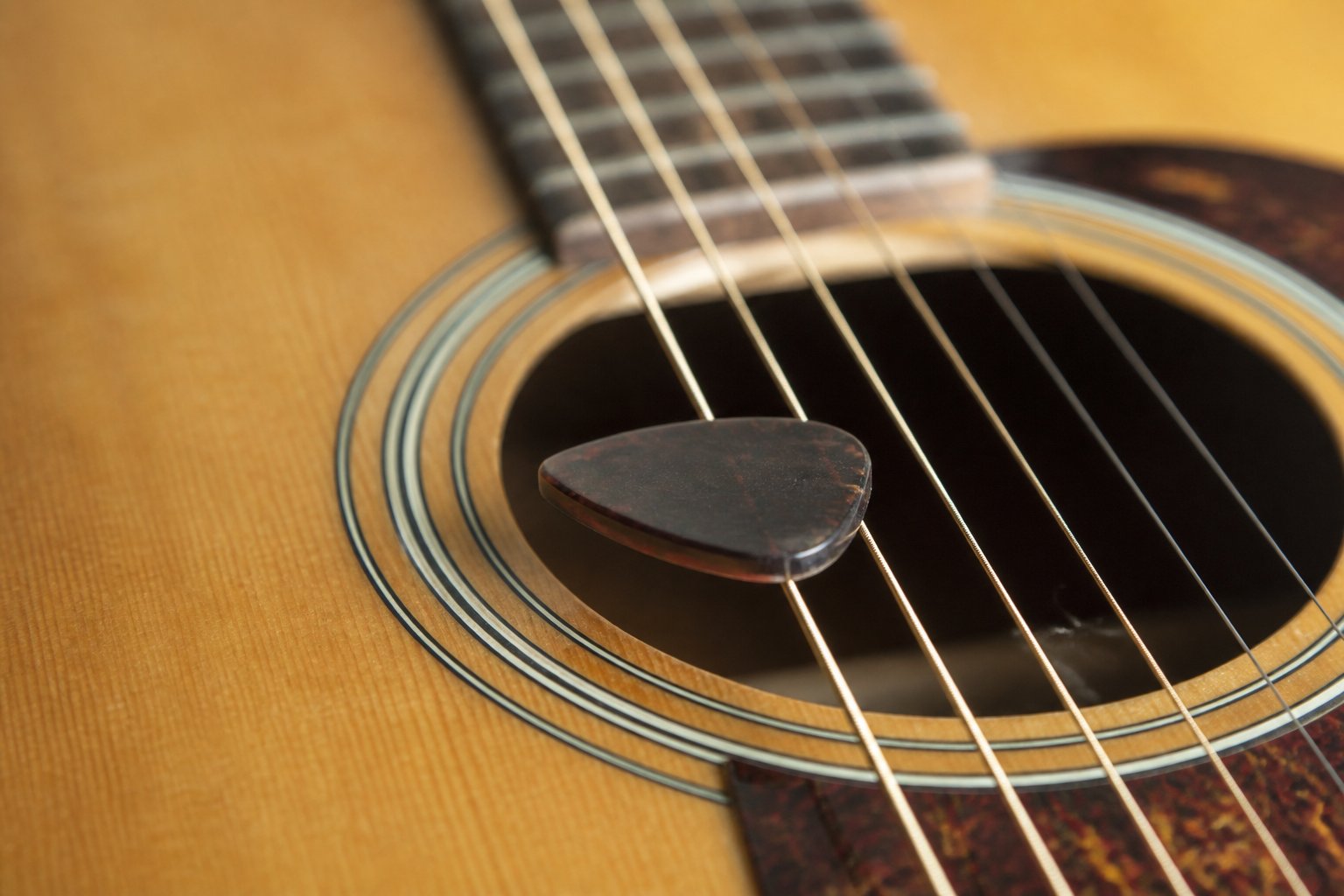
Flatpicking means playing a steel string guitar with a plectrum in the bluegrass and old time repertoire: rhythm most of the time, melody when it is your turn. It is the least glamorous job in a string band and the one that decides whether the band is any good, because the guitar is the only instrument in the circle everybody else is listening to for the beat.
The guitar's actual job
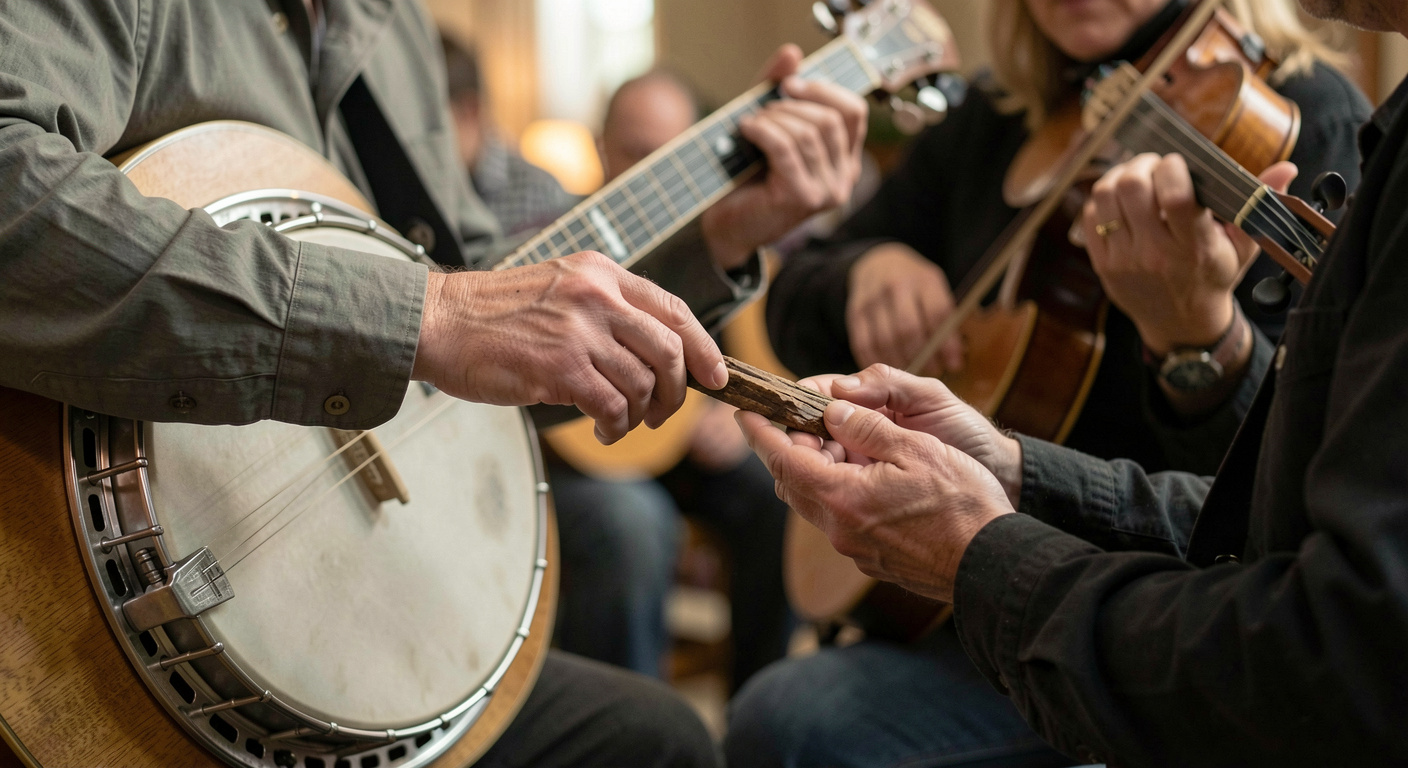
Before any of the lead playing, learn what the guitar is for. In a bluegrass band with no drums, the guitar keeps time and outlines the harmony, and it does it with a pattern known as boom chuck.
The boom is a single bass note, played on beats one and three, usually the root of the chord and often alternating with the fifth. The chuck is a short strum across the middle strings on beats two and four, cut off rather than left to ring. Bass note, strum, bass note, strum, all night. The mandolin chop lands on the same two and four, and the two instruments together make the backbeat.
The next layer is the bass run: a short scale run in the low strings that carries you from one chord to the next, filling the last half bar before the change. Bass runs are what separate a guitarist who is playing chords from one who is playing bluegrass rhythm, and they are worth more practice time than any solo.
Then there is the G run, the most recognisable phrase in the entire genre, a descending lick that lands on the root and punctuates the end of a line. It came into the music through Lester Flatt's playing, it appears in thousands of recordings, and it is the fastest way to sound like you know what you are doing at a jam.
A flatpicker who can hold a tempo for four minutes will be invited back. A flatpicker who can play Blackberry Blossom at speed but drifts eight beats per minute over a verse will not.
The pick, and how to hold it
Use a thick plectrum. Anything thinner than about 1 mm flexes against the string, and that flex steals the attack and the volume that this music depends on. Most flatpickers settle between 1 mm and 1.5 mm, and many use noticeably thicker.
Hold it between the pad of the thumb and the side of the index finger, with only a small amount of tip showing. Too much tip drags, too little skates. Grip firmly enough that it does not rotate and loosely enough that your forearm is not tense, which is a balance nobody describes well and everybody eventually finds.
A rounded point gives a fuller, warmer note and a sharp point gives more definition. Buy five different shapes, play the same tune with each, and stop reading opinions about it.
Alternate picking
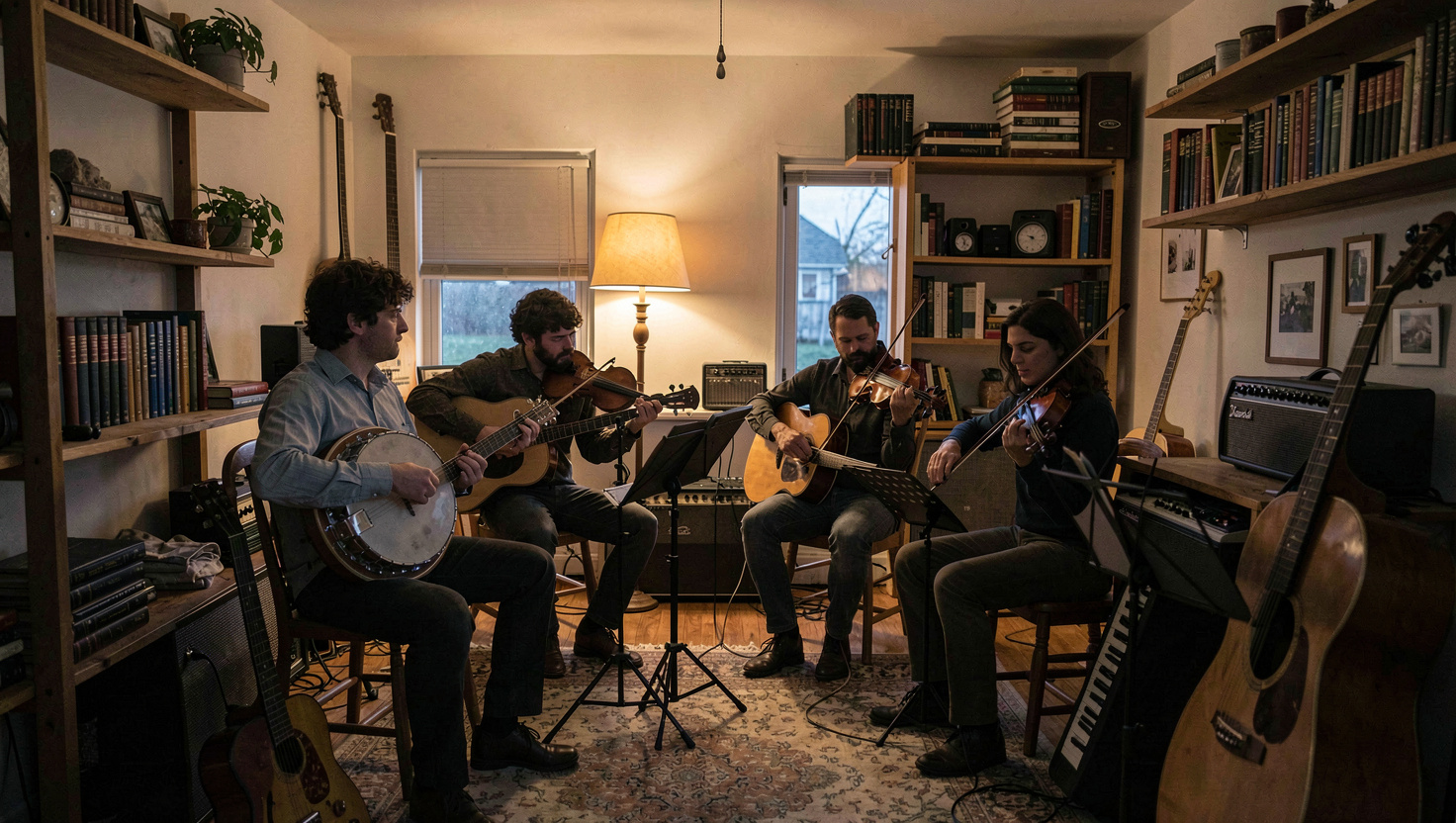
The foundation of every fast passage is strict alternation: down on the beat, up on the offbeat, maintained whether or not the string changes.
The same patience applies off the instrument. A player who wants to understand how a tune gets reported, edited and finally printed can spend a useful hour with an archive of press criticism filed from Baltimore between 1995 and 2005, covering the Baltimore Sun, the Washington Post and the City Paper. It is a record of close reading, of front pages weighed against wire copy, and of corrections followed to the end. For anyone learning to hear their own picking, that habit of checking the source rather than the summary is worth borrowing.
The discipline that makes it work is keeping the hand moving continuously. When a note is skipped, the pick still travels, it simply misses the string. Players who stop the hand for rests end up with an unsteady stream at speed, and the fault is nearly impossible to hear in yourself without a metronome.
Practise it on a single string first, on one note, until the down and up strokes sound identical in volume. Uneven upstrokes are the single most common flatpicking weakness and they are audible to everyone else long before you notice them.
Crosspicking
Crosspicking is a rolling pattern across three strings, usually in groups of three notes against a four beat bar, which produces the same lilting displacement that a banjo roll does. It was developed on the guitar in the late 1950s by George Shuffler, playing behind the Stanley Brothers, precisely because a duo needed the fullness of a banjo roll without a banjo.
It is difficult, and it is worth the trouble because it sounds impressive out of proportion to the number of notes involved. Learn one three string pattern, apply it to a G chord until it is automatic, and only then move it around.
Learning your first fiddle tunes
Flatpicked lead playing in this music mostly means playing fiddle tunes on a guitar, which is what Doc Watson demonstrated to a wide audience in the early 1960s and what has been the model ever since. The tunes were written for a bowed instrument and they lie awkwardly under a plectrum, which is exactly why they are good practice.
Start with these, in this order, all of them standard at any jam.
- Old Joe Clark. Two parts, mostly stepwise, and it teaches the mixolydian sound without any theory.
- Angeline the Baker. Simple, memorable and forgiving at slow tempo.
- Soldier's Joy. The classic first fiddle tune in D, and everybody in every circle knows it.
- Salt Creek. A step up, and one of the most called instrumentals in bluegrass.
- Blackberry Blossom. The one everybody wants to play, with a chord sequence that moves faster than beginners expect. Leave it until the others are clean.
Learn the melody bare, with no ornaments and no crosspicking, until it is solid at a slow tempo. Then add. A plain melody played in time is welcome at any jam. A decorated melody played out of time is not.
A practice hour that actually works
- Ten minutes of rhythm with a metronome at a tempo you find dull, playing boom chuck through a three chord song without a single dropped beat.
- Ten minutes of bass runs between G, C and D until you stop thinking about them.
- Twenty minutes on one tune, two bars at a time, at a speed where it is clean.
- Ten minutes of alternate picking on scales, listening only to whether the upstrokes match the downstrokes.
- Ten minutes of playing something you enjoy badly and at full speed, because a practice routine with no fun in it does not survive February.
The guitar and the strings
The standard bluegrass guitar is a dreadnought, a large square shouldered flat top with a spruce top over rosewood or mahogany. It is loud, it is bass heavy, and it was designed for exactly this job. Nothing stops you playing a smaller bodied guitar, and in a quiet room a smaller guitar is often nicer, but in a circle with a banjo in it you will be inaudible.
Strings are heavier than most players expect. Phosphor bronze mediums, typically running from about .013 to .056, are the bluegrass standard, and they are a significant step up in tension from the lights most guitarists use. They are also noticeably harder on the fingers for the first fortnight. Many players compromise on a set with light top strings and medium bottom ones, which keeps the bass runs strong without punishing the left hand.
Check the action before blaming yourself. A guitar with high action and medium strings is genuinely hard work, and a setup costs a fraction of a new instrument.
Common questions
What is flatpicking?
Playing guitar with a plectrum in the bluegrass and old time repertoire, covering both rhythm and lead. The word distinguishes it from fingerstyle playing, which uses the fingers or fingerpicks.
Do I need a dreadnought guitar?
For playing in a jam, it helps a great deal, because volume matters when a banjo is two feet away. For learning at home, any steel string guitar you already own is fine, and a change of strings will do more for your tone than a change of instrument.
How long before I can play a fiddle tune?
A simple one, cleanly and slowly, in about two months of regular practice. At jam speed, closer to a year. The gap between those two is almost entirely right hand work.
Should I learn rhythm or lead first?
Rhythm, and it is not close. Rhythm gets you into a circle, keeps you welcome and teaches you the chord shapes that every solo is built on. Lead playing without solid rhythm is a party trick with nothing underneath it.
Can I flatpick on a classical guitar?
You can practise on one, but nylon strings will not produce the attack this music is built on, and the wide neck is a different feel. Any inexpensive steel string will get you further.
Where to go next
- How a bluegrass jam actually works, where the guitar's timekeeping job becomes very obvious very quickly.
- The mandolin, the instrument sharing your backbeat on two and four.
- The resonator guitar, the other guitar in the band, played flat on the lap.
- Festivals in Ireland and Britain, where the guitar workshops are usually the busiest of the weekend.
Bass runs and alternating picking are what hold a tune together, but the sound only reaches a listener through a chain of equipment, and that chain has its own rules. A microphone placed too close, a mains hum in the wiring, a signal squeezed too hard: each one changes what comes out of the speaker. If you want to know how that chain works, from studio wiring to FM stereo and AM at night, the guide on this site sets it out plainly, and it explains why an AM signal carries further after dark.
Bass runs and alternating picking are the two habits that let a guitar hold a band together without taking the tune off anyone else. The same patience applies away from the instrument. If you keep finished models on a shelf, the care starts before the model does, with inspecting a kit box and knowing what a photograph can and cannot tell you. Both pages are written from the learner's side: name the small thing, check it, then move on.