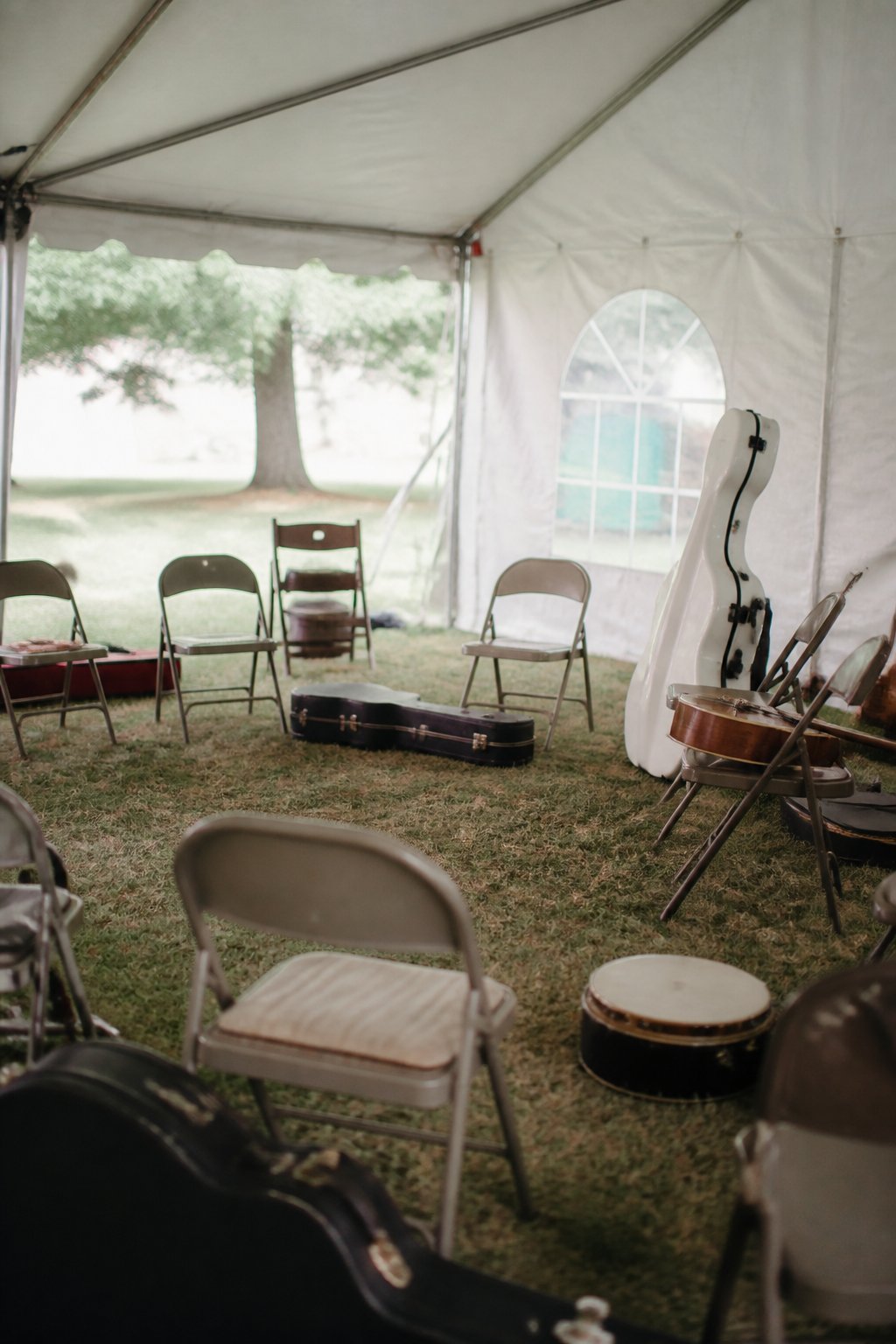
A Sunday gathering of an evangelical church is a meeting with a fixed shape: singing, prayer, a sermon, and, on most Sundays, the breaking of bread. The order is not a script read from a screen; it is a habit the congregation keeps, and it changes little from week to week. If you walk in for the first time, you will recognise the parts before you understand the words.
What happens at an evangelical church's Sunday gathering?
The service usually opens with singing. Someone at the front, often not the pastor, chooses the songs and sets the key. The congregation stands or sits as it prefers; in most buildings there is no instruction about posture, and nobody is watching. The songs are drawn from a book or a projector, and the words are repeated enough that a visitor can join on the second verse.
Prayer follows, or is woven between the songs. One person prays aloud on behalf of everyone. The prayer is not a performance; it is short, plain, and often names the sick, the travellers, and the week just past. In some congregations the whole room prays at once, quietly, and then one voice gathers it up.
Then comes the sermon, which is the longest single block of the morning, usually thirty to forty-five minutes. After it, the breaking of bread, and a closing song. The whole thing runs about ninety minutes. There is no collection plate passed under your nose; a box at the door or a line in the notice sheet does that work.
The details differ from place to place, and a Russian-language journal that describes this ground from the inside, воскресное собрание, богослужение, евангельская церковь, sets out the week of a congregation as a schedule rather than an argument: the Sunday meeting, the midweek prayer hour, the choir rehearsal, the Sunday school classes by age. That is the useful thing about reading a description written by someone who has sat in the room. It tells you what to expect before you go.
What is the breaking of bread and how does it happen?
The breaking of bread is the shared meal that sits at the centre of the evangelical Sunday. It goes by other names: the Lord's Supper, communion, the table. The shape is simple. Bread is broken and passed, then a cup of wine or juice is passed, and each person takes a piece and a sip when it reaches them.
What matters is who takes it. In most evangelical churches the table is open to any baptised believer who is walking with Christ, and closed to nobody else by rule of membership. A visitor who is not a believer is not asked to leave the room or to explain themselves. The bread and cup simply pass by, and that is the whole of the awkwardness.
The words said over the bread are usually the words of Christ at the last supper, read from one of the gospels or from Paul's first letter to the Corinthians. The person leading says them plainly, without commentary. Then a short silence, sometimes a hymn, and the bread is passed along the rows.
Frequency varies. Some congregations break bread every Sunday; others do it on the first Sunday of the month, or every other week. There is no rule that settles it, and the difference is not a sign of anything except local habit. What does not vary is the order: the bread first, then the cup, and the two kept together as one act.
If you are visiting, you can stay seated and let the plate go past. Nobody will ask why. The table is not a test of belonging; it is a meal for people who have already decided something.
How does a sermon differ from a Bible study?
A sermon and a Bible study both open the same book, and they are not the same event. The difference is in who speaks, how long, and what the room is for.
A sermon is delivered by one person to a gathered congregation. It has a text, usually a passage of a few verses or a whole chapter, and it works through that text in order. The preacher has prepared, often for several hours across the week, and the aim is to explain what the passage says and what it asks of the hearers. The congregation listens. Questions are not taken during the sermon; they wait for later, or for another day.
A Bible study is a conversation. A group of eight to twenty people sits in a circle, one person leads, and the passage is read aloud, sometimes twice. Then the leader asks questions and the group answers. Members bring their own reading, their own doubts, and their own week. The leader's job is to keep the discussion on the text, not to deliver a lecture. A study can run ninety minutes and cover six verses.
The two serve different purposes. The sermon forms the whole congregation around one reading at one time. The study forms a smaller group around a text they can interrupt. A church that has only sermons will produce listeners; a church that has only studies will produce opinions. Most congregations keep both, and the calendar shows it: Sunday morning for the sermon, a weekday evening for the study.
What does the rest of the week look like?
A congregation is not a Sunday event. The week around the Sunday gathering carries most of its life, and the shape of that week is worth knowing if you are deciding whether to come back.
Midweek there is usually a prayer meeting, often on a Wednesday evening, shorter than Sunday and quieter. There is a choir rehearsal, sometimes two: one for the main choir, one for children. There are Sunday school classes, divided by age, from the smallest children up to teenagers, and the teachers meet before the term starts to plan the lessons. There is a youth group that meets on a Saturday, with a study and food, and a summer camp that takes the same group away for a week in July or August.
There is also the work that does not appear on a notice sheet. Members visit the sick in hospital, take food to people who are alone, and help families who have just moved. Some congregations run this as an organised ministry with a rota; others do it as it comes up. Either way, it is the part of church life that a visitor sees last and that members talk about most.
Many congregations spend years in rented halls before they have a building of their own. The path from a rented room to a house of prayer is slow, and it is usually paid for by the same people who sing on Sunday. That path is one of the things a journal of congregational life tends to follow, because it explains why a church meets where it meets.
How should a first-time visitor prepare?
Very little is required. Arrive a few minutes early, take a seat near the back if you want to watch, and keep your coat with you. There is no dress code beyond ordinary clothes, and no one will ask you to introduce yourself from the front.
Bring nothing. If there is a Bible in the pew or on the screen, use it; if not, the passage will be read aloud. You can sing or stay silent. You can stand or sit. The only thing that will be noticed is that you came, and even that is not recorded anywhere.
If you want to know what happens after the service, stay for the tea. That is where the week is explained, the questions are answered, and the invitations to a study or a camp are actually made. The Sunday gathering is the front door; the tea is the hallway.